
India’s growing appetite for beverages with particulates
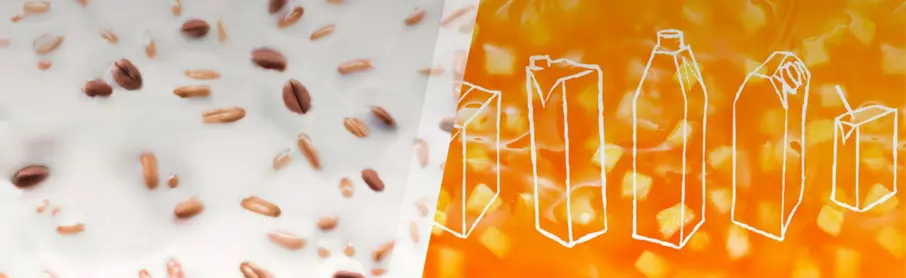
What’s the first thing that comes to your mind when you think of beverages with added particulates? Probably juice with pulp or fruit bits!
One of the most common and popular beverages with particulates - pulpy fruit juices, are considered a lot more nutritious and fibrous than those without pulp, and they also give us that freshly squeezed experience.
According to a report by market research and advisory firm Technavio, the fruit pulp industry in India is expected to grow in market share by USD 124.38 million from 2021 to 2026, at a CAGR of 7.61%.
Products with particulates have always been present in the Indian beverage landscape – ranging from thandai with dry fruits, to jigar Thanda, to falooda drinks, to the summer specific mango milkshake with mango pieces and the mosambi juice with fiber. Usually sold loose in juice stalls or milk bars, these beverages have been part and parcel of our lives. However, we now see these products increasingly available also in packaged forms – in glass bottles, cans, plastic bottles, and now even in SIG cartons!
Rising popularity of beverages with particulates in India’s FMCG Sector
From MTR’s badam milk with almond pieces, and Minute Maid’s Pulpy Orange, to Patanjali’s Aloe Vera drink and Paper Boat’s Lychee Ras, beverages with particulates appeal to India’s discerning consumers for a variety of reasons, from health consciousness to the idea of a value-added product that satiates both thirst and hunger.
Kantar study on beverages with particulates
SIG India recently commissioned Kantar to do a qualitative study to better understand the acceptance of beverages with particulates among Indian consumers. The study was planned with a set of over 100 consumers across three major cities - Delhi, Ahmedabad, and Chennai, covering four key consumer segments - young adults, teenagers, mothers, and kids. The study exposed the participants to various sample products and gauged their responses, including perception vs. standard products, their willingness to buy the same and to pay a premium.
The samples included a wide and innovative variety of beverages with particulates, from juices with chia seeds or aloe vera strands, flavoured lassi with fruit bits, to milk shakes with nata de coco bits, dry fruits, etc.
The common observation across all consumer groups was that beverages with particulates are highly differentiated because of their multi-sensorial, enhanced consumption experience. The varied sensorial enjoyment is because of the many different textures, from jelly-like to crunchy and the prolonged taste enjoyment due to chewing. Consumers spoke about the fun element added in the products due to the unexpected particulates, which made the experience different from that of consuming a standard beverage.
In addition, the combination of particulates in beverages helps enhance the nutritional profile of the products due to the fiber added to the beverage.
Three key factors that made beverages with particulates a hit were:
- The elevated, unique consumption experience
- Enhanced nutrition value due to added fibre
- The experience of drinking and eating at the same time quenches thirst and also satiates hunger
The India Kantar study also highlighted how beverages with particulates are mostly consumed on-the-go, though many consumers also mentioned that they would like to consume these at home also, as such beverages are not easy to make. Some of the specific usage occasions cited include – time between meals (when you are slightly hungry), after workout (when you need a quick burst of energy), and after commuting (for refreshment).
How to package these products with particulates
Brands need to upgrade their processing and packaging systems to be able to package these products without any need for preservatives. The sterilization and handling systems need to be adapted to handle particulates with care, since these are prone to breaking easily. Similarly, the aseptic filling machines must also be designed to handle particulates and the package needs to have either a larger straw to accommodate the particulates, or should have a spout to make consumption easier.
SIG’s drinksplus portfolio
Catering to this unique but rapidly evolving segment, SIG presents its proprietary tool, drinksplus – a flexible filling technology that allows easy aseptic filling of beverages with particulates in cartons.
SIG also provides brands with detailed know-how and information on the ingredients and particulates and their sourcing, as well as processing and upstream supply, along with access to its vast global supplier network.
Combining sensory and indulgent experiences with flexibility, affordability, and a range of value-added benefits, drinksplus is perfectly aligned with the needs of the Indian market - for brands as well as consumers, all across the country.
- May 09, 2022